Losing Deep Sleep After 60 Raises Dementia Risk by 27 Percent
A 2023 study found that adults over 60 who lose just 1 percent of slow-wave sleep per year are 27 percent more likely to develop dementia.

We all know getting a good night’s sleep is vital to the healthy functioning of our bodies, but the importance of sleep goes much further than you might realize.
According to research, the risk of getting dementia may go up as you get older if you don’t get enough slow-wave sleep. A 2023 study found that over-60s are 27 percent more likely to develop dementia if they lose just 1 percent of this deep sleep each year.
Slow-wave sleep is the third stage of a human 90-minute sleep cycle, lasting about 20–40 minutes. It’s the most restful stage, where brain waves and heart rate slow and blood pressure drops. Deep sleep strengthens our muscles, bones, and immune system, and prepares our brains to absorb more information.
Another recent study discovered that individuals with Alzheimer’s-related changes in their brain did better on memory tests when they got more slow-wave sleep.
“Slow-wave sleep, or deep sleep, supports the aging brain in many ways, and we know that sleep augments the clearance of metabolic waste from the brain, including facilitating the clearance of proteins that aggregate in Alzheimer’s disease,” said neuroscientist Matthew Pase from Monash University in Australia.
“However, to date we have been unsure of the role of slow-wave sleep in the development of dementia. Our findings suggest that slow-wave sleep loss may be a modifiable dementia risk factor.”
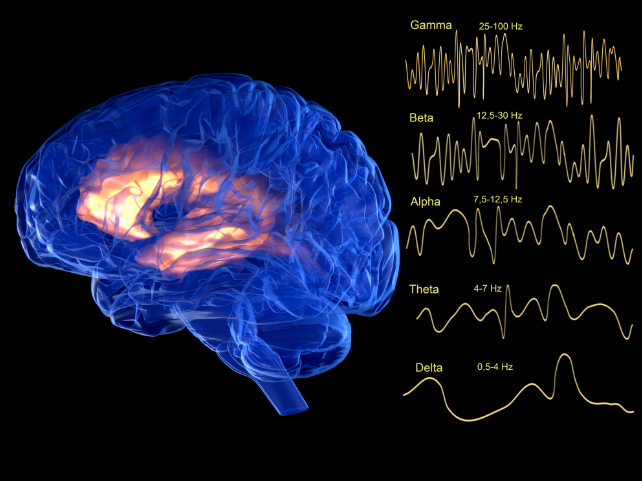 Brain waves can be fast (top) or slow (bottom) depending on our state of consciousness. (selvanegra/Getty Images)
The Study
Pase and colleagues from Australia, Canada, and the US examined 346 Framingham Heart Study participants who had completed two overnight sleep studies between 1995 and 1998 and between 2001 and 2003, with an average of five years between testing periods.
This community-based cohort, who had no record of dementia at the time of the 2001–2003 study and were over 60 years old in 2020, gave researchers a chance to look into the link between the two factors over time by comparing datasets from two in-depth polysomnography sleep studies, then monitoring participants for dementia up until 2018.
“We used these to examine how slow-wave sleep changed with aging and whether changes in slow-wave sleep percentage were associated with the risk of later-life dementia up to 17 years later,” said Pase.
What the Data Showed
In the 17 years of follow-up, 52 dementia cases were recorded among the participants. Overall, slow-wave sleep was found to decrease from age 60 onward, with this loss peaking between the ages of 75 and 80 before leveling off.
By comparing participants’ first and second sleep studies, researchers discovered a link between each percentage point decrease in slow-wave sleep per year and a 27 percent increased risk of developing dementia. That risk increased to 32 percent when narrowed specifically to Alzheimer’s disease, the most common form of dementia.
 Deep sleep strengthens our muscles, bones, and immune system, and prepares our brains to absorb more information. (GlobalStock/Canva)
The Framingham Heart Study measures multiple health data points over time, including hippocampal volume loss — an early sign of Alzheimer’s — and common factors contributing to cardiovascular disease. Low levels of slow-wave sleep were linked to a higher risk of cardiovascular disease, use of medications that can impact sleep, and carrying the APOE ε4 gene, which is associated with Alzheimer’s.
“We found that a genetic risk factor for Alzheimer’s disease, but not brain volume, was associated with accelerated declines in slow-wave sleep,” Pase said.
What This Means
Although these are clear associations, the authors note this type of study doesn’t prove that slow-wave sleep loss causes dementia — it’s also possible that dementia-related brain processes cause sleep loss. More research is needed to fully untangle these factors.
In the meantime, prioritizing sufficient sleep remains important for far more than memory alone, and there are steps individuals can take to boost their chances of getting more slow-wave sleep each night.
The study has been published in JAMA Neurology.
An earlier version of this article was published in November 2023.