What Happens When a Black Hole Evaporates Completely?
Black holes shrink through Hawking radiation, but do they ever expose what's inside? Here's what physics predicts about their final fate.
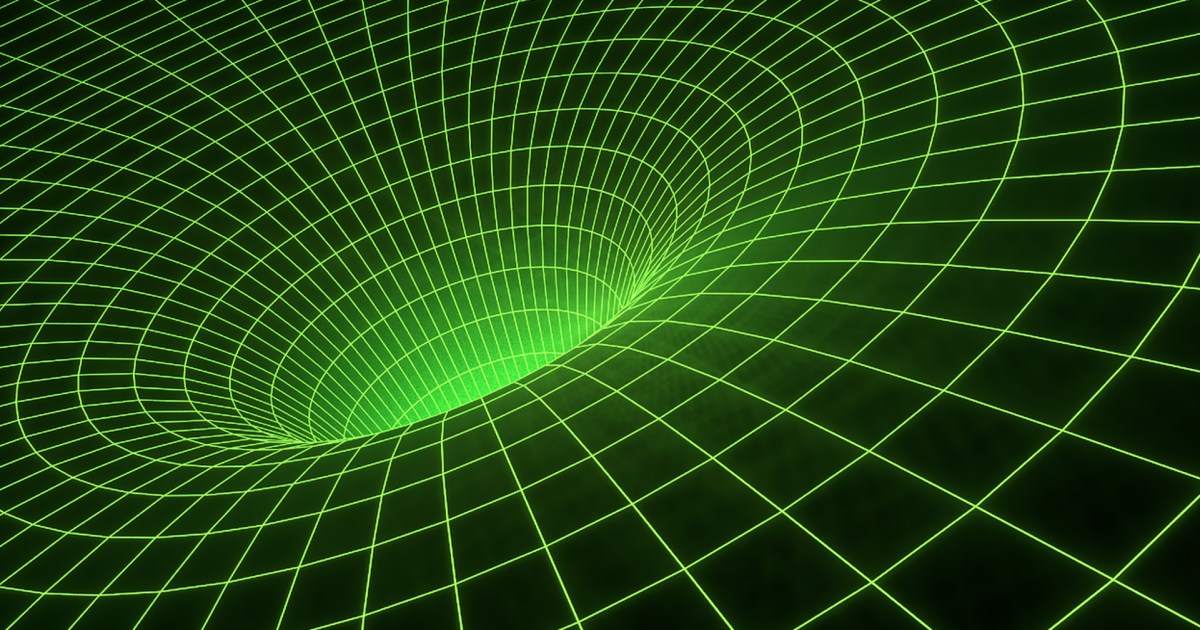
Here in our Universe, there are few objects more awe-inspiring or mysterious than black holes. First theorized to exist back in the late 18th century, they represent a region of space where so much mass and energy is confined within such a small volume that, from within it, nothing can escape: not even light itself. Black holes are bounded by an event horizon, and as more and more mass falls into the black hole, the black hole grows, with its event horizon increasing in size as it happens.
But at some point — even if it’s very far into the future — the Universe will become more evolved, more isolated, and more sparse in terms of both matter and energy. Beyond a certain point, black holes will cease to effectively grow, and once that happens, a different process will begin to dominate: Hawking radiation, which is the quantum process by which black holes decay. As the decay progresses, the black hole will lose mass and its event horizon will shrink. Will that ever allow us to see what’s inside of it? That’s the question of Artur Gouveia, who asks:
“I’d like to know what happens to a black hole which receives no matter inflows from an accretion disk and keeps on losing mass from Hawking radiation. Does there arrive a moment when the mass is not enough to keep light from going out? What happens at that moment? Does an object become visible? Is it a neutron star or an even denser object? Have these ends of black holes been observed in the universe?”
It’s a great and wondrous question, and stretches the limits of what’s conventionally known about physics today. Although it’s well beyond the limits of anything we can actually observe and measure today, here’s what we expect to occur.

One of the most important contributions of Roger Penrose to black hole physics is the demonstration of how a realistic object in our Universe, such as a star (or any collection of matter), can form an event horizon and how all the matter bound to it will inevitably encounter the central singularity. Once an event horizon forms, the development of a central singularity is not only inevitable, it’s extremely rapid. Credit: J. Jarnstead/Royal Swedish Academy of Sciences; annotations by E. Siegel
How Black Holes Form
Forming a black hole is actually easier than you might think. All you have to do is accumulate enough mass (or energy) within a particular volume of space so that, within that volume, the escape velocity — the speed at which you’d need to travel in order to escape the gravitational pull of the mass (or energy) within that region — exceeds the speed of light. Because the speed of light is the ultimate speed limit of quanta in this Universe, there’s nothing that can move faster than it: neither matter, nor energy, nor quanta, nor any information-containing signal.
Since gravitation is an always-attractive force, the Universe provides plenty of opportunities for black holes to come into existence. They can arise:
- from a contracting, cold clump of sufficiently massive gas, where simulations indicate that converging streams of cold gas can form black holes of tens of thousands of solar masses,
- from the deaths of stars, including from the cores of sufficiently massive stars that die in a core-collapse supernova and from stars whose interior pressure suddenly drops and the entire star directly collapses to a black hole,
- and from the mergers of stellar remnants, such as neutron stars, that exceed a particular mass threshold, overcoming the repulsive degeneracy pressure of the neutrons themselves and leading to the formation of a black hole.
All told, we estimate that there are around 40 quintillion black holes within the observable Universe at present.
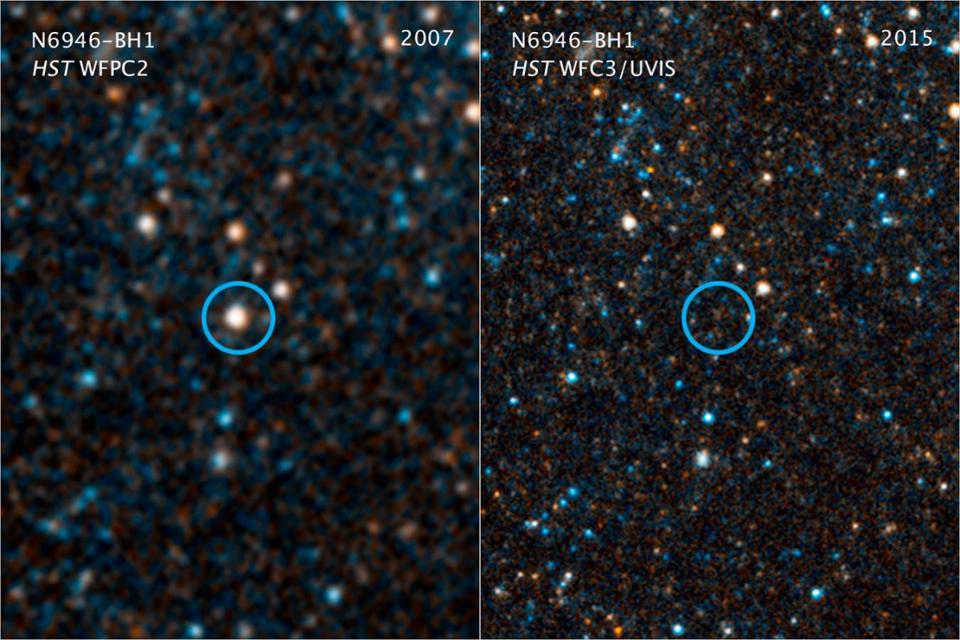
The visible/near-IR photos from Hubble show a massive star, at least 25 times the mass of the Sun, that has winked out of existence, with no supernova or other explanation. Direct collapse is the only reasonable candidate explanation, and is one known way, in addition to supernovae or neutron star mergers, to form a black hole for the first time. The direct collapse of this particular object, while still under investigation, may have been triggered by a stellar companion. Credit: NASA/ESA/C. Kochanek (OSU)
How Black Holes Grow — and Stop Growing
Black holes grow by feeding on matter and energy. Whenever anything — a star, a planet, a cloud of gas, a mote of dust, an atom, a single particle, even a photon or the energy from a gravitational wave — encounters a black hole’s event horizon, it enters into the black hole’s interior, and doesn’t come back out. Even the leftover photons from the Big Bang, the CMB, run into the event horizons and increase their mass. While we normally think of black holes feeding on matter through their accretion disks, this is just the most visible signal given our current capabilities: because the disk heats up and emits infrared and radio light, which we can observe. In reality, there are all sorts of processes that unavoidably increase the mass of black holes.
But eventually, given enough time, the stars will die. Galaxies will finish merging, and the Universe will drive unbound galaxies mutually away from each other, owing to dark energy. Stellar remnants will gravitationally interact, merging, getting kicked out of galaxies, or hurled into their galaxy’s supermassive black hole. Gas and dust will become rarer and rarer, and eventually — around 10²⁰ years from now — black holes will stop growing in mass. The rate of mass growth for a typical black hole will finally fall below the rate of mass loss from an unavoidable quantum process at play: Hawking radiation.

Although the amount that spacetime is curved and distorted depends on how dense the object in question is when you’re close to the object’s edge, the size and volume that the object occupies is unimportant far away from the mass itself. For a black hole, neutron star, white dwarf, or a star like our Sun, the spatial curvature is identical at sufficiently large radii. However, close to the event horizon of a black hole, more severe curvatures are achieved than anywhere else. Far away from all of these sources, spacetime is asymptotically flat, but neither perfectly flat nor truly empty. Credit: OpenStax University Physics

How Hawking Radiation Works
Hawking radiation arises from the fusion of two independent ideas that don’t typically “play nice” with each other:
- The idea of curved spacetime, which comes from Einstein’s general relativity, where the region just outside of a black hole’s event horizon represents the region of strongest spatial curvature that we’re connected to (the interior of the event horizon is connected to the black hole’s singularity, which is shielded from us by the horizon itself),
- And the idea of quantum field theory: where not only are particles quantized, but the quantum fields that underpin reality are also quantum in nature, even in regions where there is no matter or energy, such as in the vacuum of empty space.
Although we normally perform our quantum field theory calculations with a background of flat space, this is just because it’s an excellent approximation to reality in most instances — the spatial curvature is small almost everywhere — and because it makes calculations much, much easier. However, in principle, space is curved everywhere. Because it’s so severely curved the closer you get to a black hole’s event horizon, what any observer sees as the quantum vacuum “close to” the event horizon won’t be the same as the quantum vacuum they see for a location “far from” the event horizon. Although an observer at any location in free-fall always sees the same quantum vacuum, the differences between “near” and “far” means that there’s a gradient in the vacuum in quantum field theory.
This gradient in the vacuum is what gives rise to Hawking radiation: a thermal spectrum of particles and radiation emitted from just outside the event horizon, carrying energy away from the black hole. The smaller the black hole, the hotter and more intense the Hawking radiation, and the faster the black hole loses mass. As the black hole shrinks, its event horizon contracts with it — there is no mechanism by which the interior becomes exposed. The black hole does not gradually reveal a neutron star or any other object hidden within; rather, it radiates away its mass entirely, ending in a final burst of high-energy radiation when it reaches the last stages of evaporation.
Whether any remnant survives that final moment, or whether the black hole simply ceases to exist entirely, remains one of the deepest unsolved problems in theoretical physics. What is clear is that no black hole evaporation event has ever been observed — the process takes far longer than the current age of the Universe for any black hole of stellar mass or larger. The end of a black hole is not a revelation of hidden structure, but a quantum farewell: a slow fade into radiation, and then silence.