NASA Satellite Captures Black Sea's Vivid Turquoise Spring Bloom
Every spring, the Black Sea turns turquoise as microscopic phytoplankton bloom in vast numbers. NASA's PACE satellite captured the striking transformation in Ju
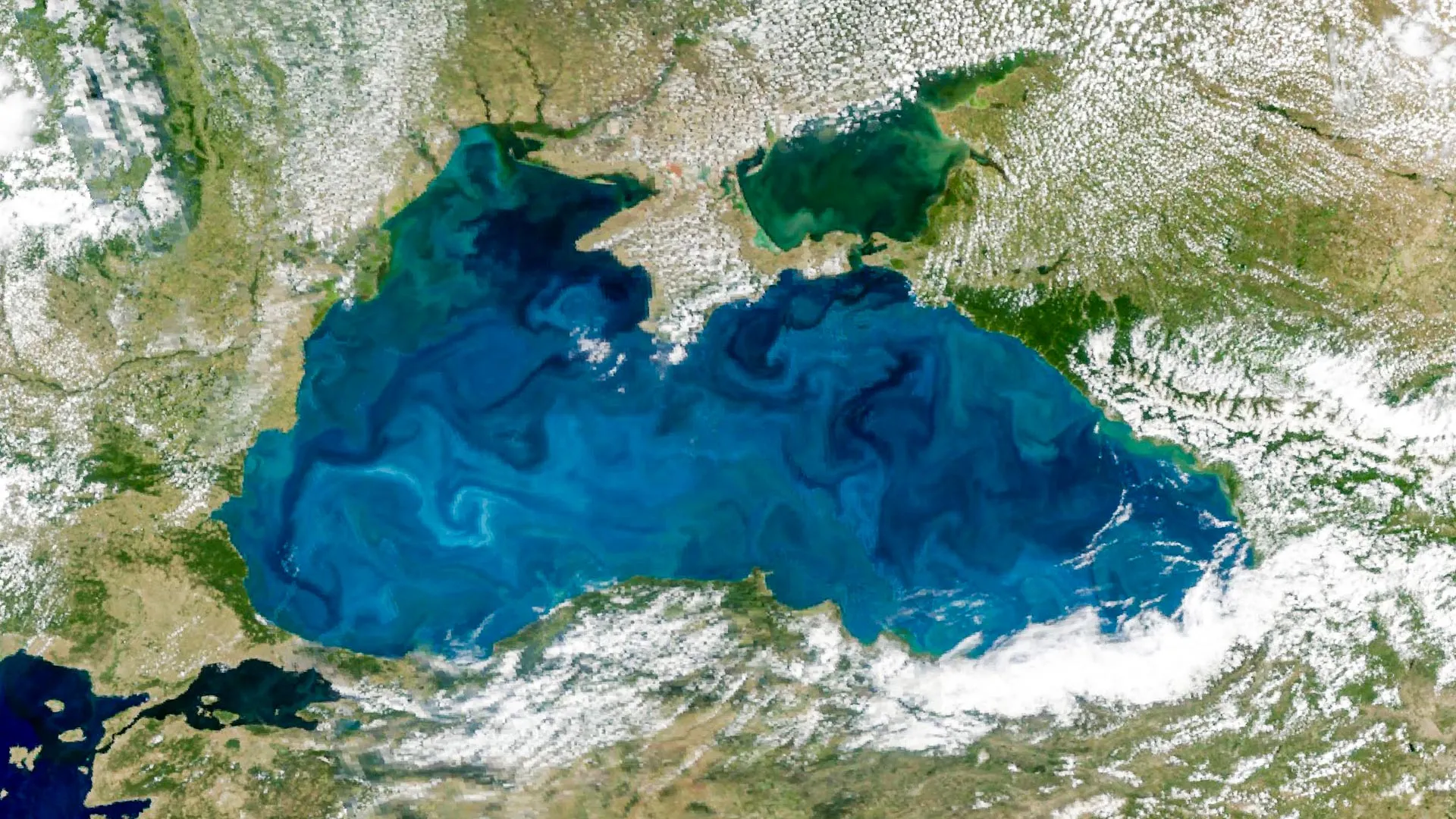
The Black Sea, which lies between Europe and Asia and connects to the Mediterranean through a series of waterways, is known for its dark waters. But every spring and summer, it undergoes a remarkable transformation, with large areas turning a vivid turquoise. On June 22, 2026, NASA’s PACE (Plankton, Aerosol, Cloud, ocean Ecosystem) satellite captured this colorful seasonal display using its OCI (Ocean Color Instrument).
Scientists believe the striking turquoise color comes from blooms of coccolithophores, microscopic phytoplankton coated in calcium carbonate plates. When these organisms multiply in enormous numbers during late spring and early summer, their reflective shells scatter sunlight and give the ocean a milky blue appearance that is visible even from space.
At other times of the year, different microscopic algae called diatoms become more abundant. Unlike coccolithophores, diatoms have silica shells and generally make the Black Sea appear darker instead of brighter.
Bosphorus Also Glows Turquoise
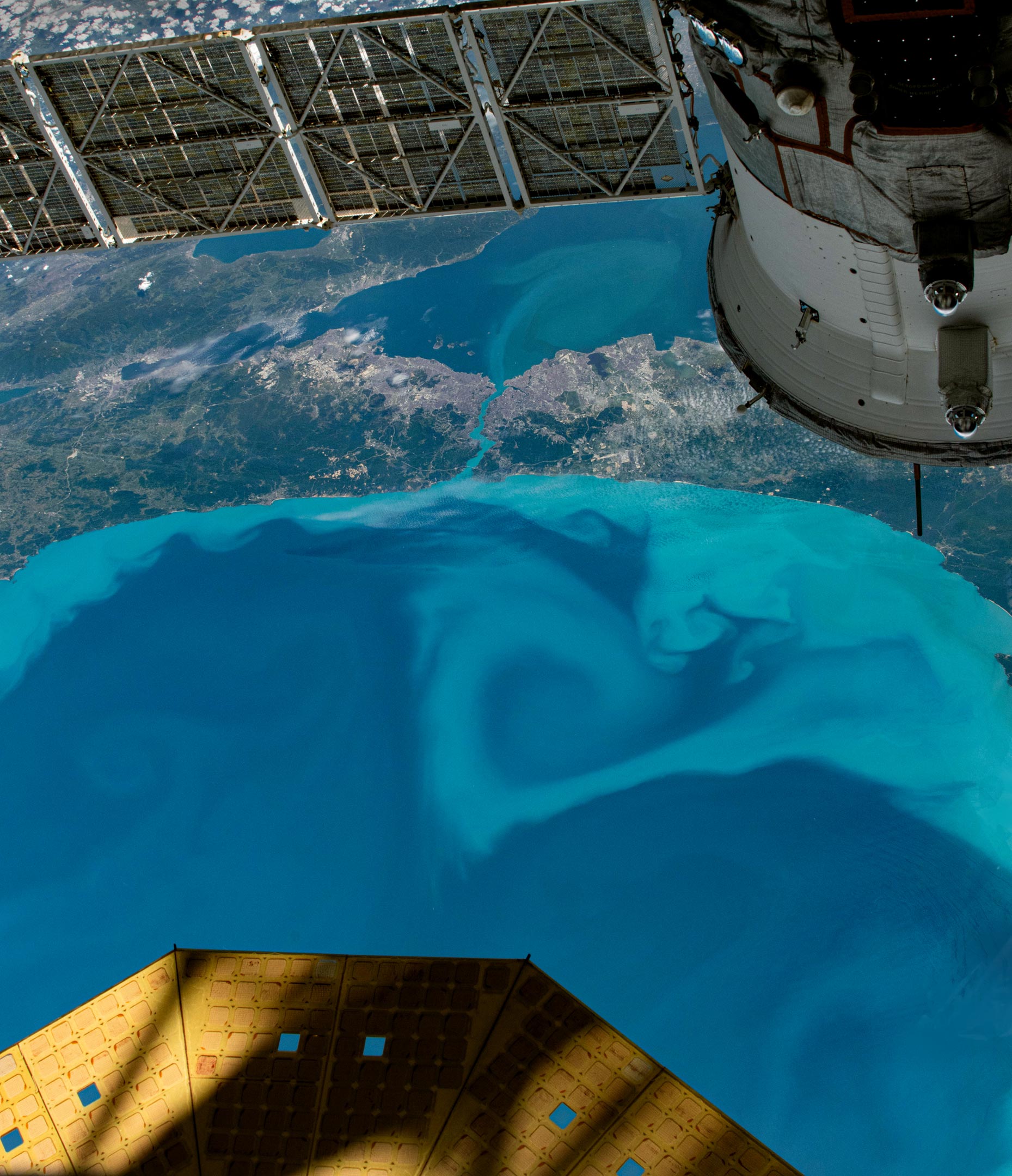
The seasonal bloom extended into the Bosphorus, the narrow waterway that runs through Istanbul and links the Black Sea with the Sea of Marmara. On May 27, 2026, about a month before the PACE satellite captured the wider scene, an astronaut aboard the International Space Station photographed the strait as blooming phytoplankton traced swirling currents on both sides of the channel.
Why These Blooms Matter
Although individual coccolithophores are far too small to see with the naked eye, their populations can become so dense that entire regions of ocean change color. Because these blooms are easily detected from orbit, satellite observations provide scientists with an important way to monitor marine ecosystems in areas where collecting water samples is difficult.
These phytoplankton also play an important role in Earth’s carbon cycle. As they grow, they absorb carbon from the atmosphere and surrounding water. After they die, a portion of that carbon sinks to the seafloor, where it can remain stored for long periods, helping transfer carbon from the surface ocean into long-term storage.
NASA Earth Observatory created the satellite image using PACE data from NASA EOSDIS LANCE, GIBS/Worldview, and the NASA Ocean Biology Distributed Active Archive Center. The astronaut photograph was taken on May 27, 2026, by a member of the Expedition 74 crew using a Nikon Z9 camera with a 50 millimeter focal length, and was provided by the ISS Crew Earth Observations Facility and the Earth Science and Remote Sensing Unit at NASA Johnson Space Center. Additional photographs taken by astronauts and cosmonauts are freely available through the NASA/JSC Gateway to Astronaut Photography of Earth.