James Webb Telescope Detects Galaxy-Killing Wind Near Dawn of Time
JWST has detected powerful star-quenching winds from merging early galaxies. The finding may explain why so many ancient galaxies died young.
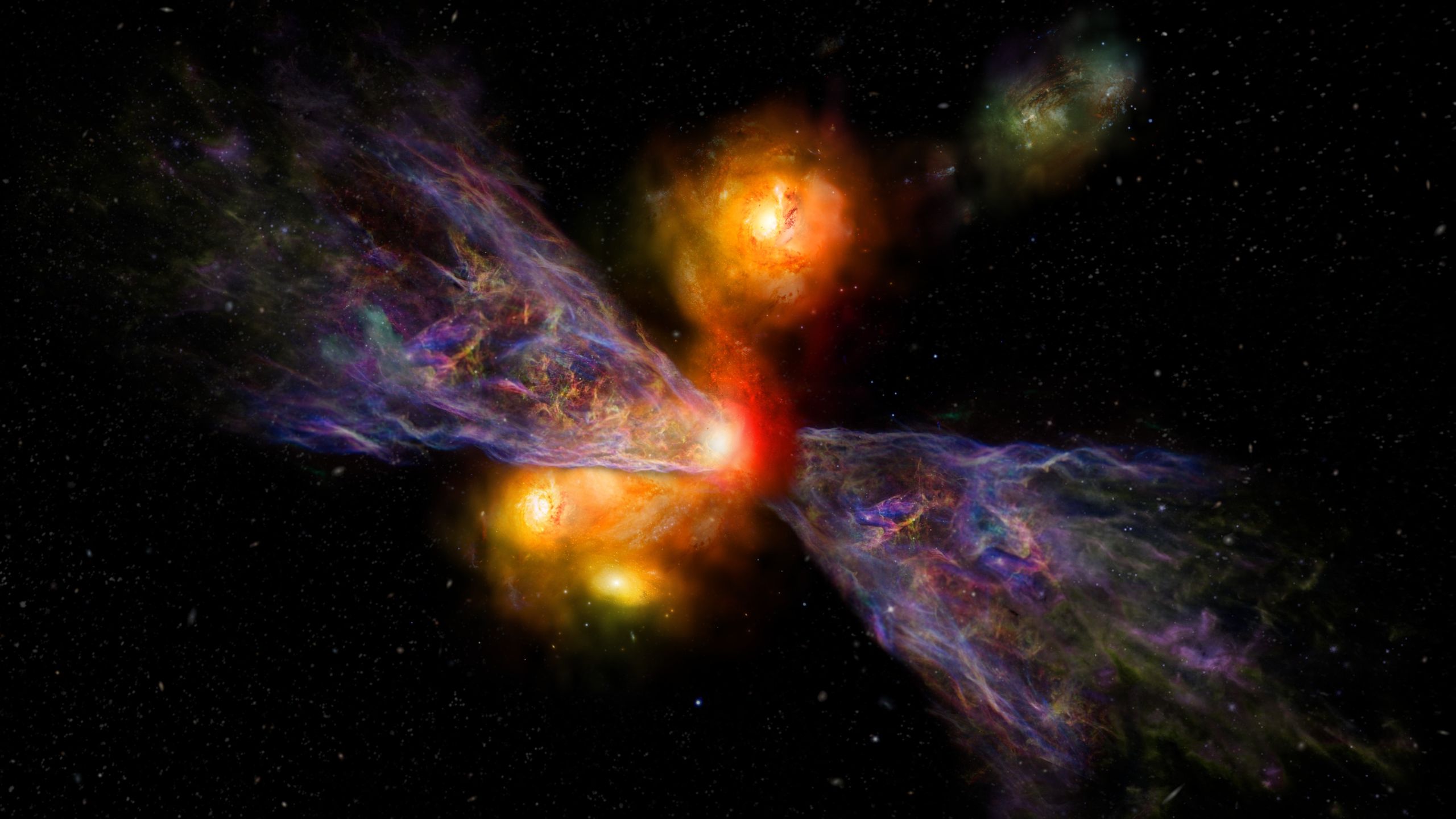
When galaxies collide, it’s less like a train wreck and more like a marriage: two separate entities merge into a single massive celestial structure. But relationships are hard, whether you’re a human or a galaxy — and this process may also “kill” the merging galaxies by unleashing star-quenching winds.
This mechanism may help to explain an enigma in the early universe. A glut of James Webb Space Telescope (JWST) observations have shown that galaxies grew surprisingly massive within 1 billion years of the Big Bang. Just as unexpectedly, many of these galaxies appear to have already stopped producing stars and grown quiescent — effectively dead — only about a billion years later. Understanding what triggered these powerful winds during galaxy mergers could shed light on how and why star formation shuts down so dramatically in the early universe, with potential implications for the long-term fate of galaxies like our own Milky Way.