Cape Leopards Are Genetically Unique — And Smaller for a Reason
A whole-genome study reveals South Africa's Cape leopards form a distinct genetic group, isolated for 20,000 years and adapted to smaller prey.
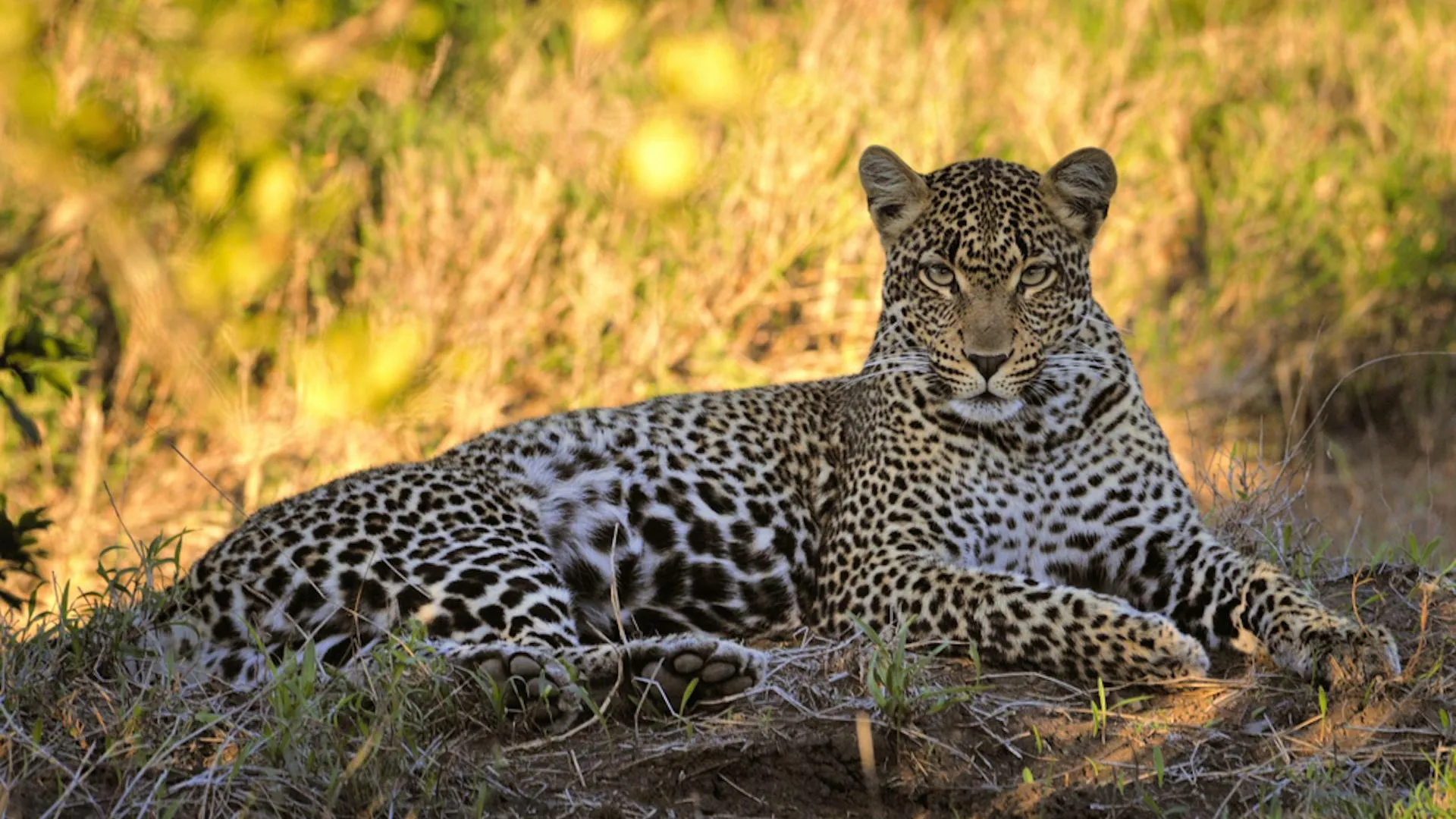
Animals of the same species don’t always look the same. From birds with different beak shapes to mammals that vary in size or color, populations living in different places can often look very different.
What’s much harder to pin down is why these differences arise. Are they shaped by local environments? Or driven by natural or sexual selection? Or are they simply the result of the random loss of gene variants as populations become isolated and slowly diverge over time?
A team of leopard conservationists and researchers set out to answer some of these questions by investigating a remarkable population of fewer than 1,000 leopards in South Africa’s Cape Floristic Region, an area that covers the country’s Western Cape and parts of the Eastern Cape and Northern Cape.
These leopards are much smaller than leopards elsewhere on the continent — in some cases only half the body mass. For decades, researchers and conservationists have debated whether the leopards of this region are truly a separate population in terms of their genes, and if so, what might be driving that difference.
Previous genetic studies offered only limited answers. Most relied on a small number of genetic markers — specific spots in the DNA where mutations tend to happen more. This is useful for finding large-scale patterns, but misses the finer details needed to understand how populations evolve.
To fill this gap, researchers turned to whole-genome data. Instead of looking at small regions of the DNA where variation is expected, they analyzed the full sequence of paired DNA bases that make up the leopard’s genome — 2.57 billion base pairs, or roughly 19,000 genes in total. Together with local leopard experts and evolutionary biologists, the team collected muscle or skin tissue from the leopards and compared them with genomes of leopards from other parts of Africa.
The findings confirmed that leopards of the Cape are genetically different from other African leopards. They have been isolated from other leopards for a long time and have adapted to one region — a discovery with important implications for conservation.
Leopards in the Cape: Smaller, Isolated, and Genetically Unique
Leopards are among the most widespread large carnivores in the world, found across Africa and parts of Asia. Eight subspecies are currently recognized, including the African leopard (Panthera pardus pardus).
The African leopard found across most of sub-Saharan Africa shows extraordinary variation in coat colour, body size, and skull shape. In general, leopards living in open habitats tend to be larger and paler, while those in forested areas are often smaller and darker.
The leopards of the Cape Floristic Region — a biodiverse area rich in plants found nowhere else in the world — are an exception to this pattern. They are relatively small in mass, but until now, no one knew the reason for their distinctive appearance.
The research found that Cape leopards are not just smaller than other African leopards — they have also formed their own genetic group, clearly separated from leopards elsewhere in southern and eastern Africa.
A similar pattern emerged for leopards from Ghana in west Africa. In both cases, there was little evidence of recent genetic mixing with neighboring populations.
Leopards occur and move all along the length of the Cape Fold Belt mountain chain, which serves as a refuge for the cats. Beyond the northern and eastern edge of this mountain chain, leopard movement appears to stop — the likely barriers being very dry semi-desert in the north and high human activity across much of the Eastern Cape.
How Climate Change and Human Persecution Shaped Cape Leopards Over 20,000 Years
Looking back in time helped explain why this population is genetically unique. Analyses suggest that these leopards began diverging from populations further east around 20,000–24,000 years ago, during the Last Glacial Maximum — the coldest phase of the last ice age.
Researchers estimated this by analysing whole-genome DNA to reconstruct when populations split and how much they exchanged genes in the past, effectively reading their shared evolutionary history as written in the genome.
During this period, southern Africa became cooler and drier, with fewer grasslands and less food, making it harder for animals to move and survive and causing populations to become separated. More recently, leopard numbers fell sharply in the 1800s and 1900s, likely due to human hunting, habitat loss, and bounty systems that encouraged farmers to kill leopards. In 1968, the leopard bounty ended and the population began to recover as conservation efforts grew.
Because the leopards had been isolated and heavily hunted, researchers expected to find significant genetic depletion — the kind that occurs when small populations inbreed and lose genetic diversity. Low genetic diversity makes it harder for populations to adapt to new threats like climate change, disease, and human pressure. However, Cape leopards showed only slightly lower genetic diversity than other African populations, which is a notably positive finding.
Clues in the Genome Point to Adaptation
The research also investigated why Cape leopards are smaller in size.
Around 90 genes were found to be more common in these leopards, linked to body size, muscles, bones, and energy use. These differences align with the environment they inhabit, which has much smaller, more sparsely distributed prey than other leopard habitats. Leopards in the Cape feed mostly on species like rock hyrax (Procavia capensis), klipspringer (Oreotragus oreotragus), and Cape grysbok (Raphicerus melanotis).
Together, these genomic signals suggest that Cape leopards are small because they have adapted that way — not solely because of isolation or genetic drift.
Why This Matters for Conservation
Populations that are genetically distinct and locally adapted are often described as evolutionarily significant units. This means they represent a unique branch of a species’ evolutionary history and require specific protection so they can continue to adapt to future change.
Leopards in the Cape Floristic Region occupy a landscape unlike any other in southern Africa, shaped by low prey availability, unique vegetation, and rapidly expanding human populations. Large fenced reserves are rare, and leopards frequently move through agricultural and urban-edge landscapes where conflict with people is common.
To conserve these leopards, their habitats need to be connected so the animals can move freely and safely. Poaching and road mortalities are two additional threats that must be addressed to ensure the persistence of leopards across the landscape. Working in partnership with landowners and communities is essential to their protection.
By conserving these leopards, we are not only saving an iconic predator, but also preserving an evolutionary legacy shaped over thousands of years by one of the most distinctive landscapes on the African continent.